This Book Traumatized Me For Life + My 8 Other December reads (so far)

Let's establish a few items up front:
- This is not a rant, it's a rave–The School for Good Mothers is a 5-star read.
- This book is, however, a horror novel, I don't care what anybody says.
- This is another post railing against the dangers of unchecked AI.
- I'm saving my 'Best of 2025' post for the beginning of 2026; because reading The School for Good Mothers this late in December is proof that the best may still be coming.
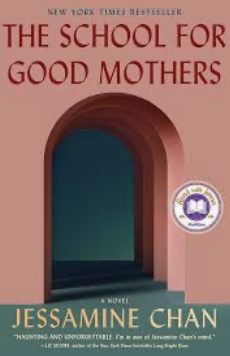
The School for Good Mothers, by Jessamine Chan
Rating: Infinity/5
Genre: Speculative Lit Fic/Technohorror (???)
Squick Factor: 0/5
Super Short Synopsis: A 37-year-old mother has a bad day, and so Child Protective Services separates the mother from her 18-month-old daughter. During the interim evaluation period, the daughter must live with her father and the woman he left the mother for. Following the interim evaluation, a judge sends the mother away, at CPS's recommendation, to a one-year program. In the assigned institution, she will "learn to be a good mother." A the end of the program, a judge will use AI-generated monitoring data and AI analytics to determine whether or not the mother is "good enough" to be reunited with her child.
What Is This Book Really About?
Jessamine Chan could have just written the front story in The School for Good Mothers as the Super Short Synopsis describes, and it would have been a page-turner. The writing is excellent, the tension, the narrative arc, oh my. She is a talented writer.
But what takes this book into the realm of the literary is the way Chan layers in the gender issues, the techno-lords-burning-down-the-world issues, the suffocating expectations American society holds for mothers, how AI can be racist as f*** (and why we should care), and what AI cannot do but the technolords are trying to force us to let it do.
One idea screamed the loudest through the text: NOBODY ASKED FOR THIS, STOP MAKING THIS CRAP, WE DON'T WANT IT.
But Chan doesn't SAY any of this. You feel it through the words, in your guts, in your heart. When I finished this book, I felt real, true fear. Intense, lingering anxiety. My mind whirred about the future, what I have to do to protect myself and my own children. Seriously--do I need to move to remote area and go off the grid?
Because for a "science" or "speculative" fiction novel, the lurking evil in The School for Good Mothers is so close to us in real life we can just about touch it.
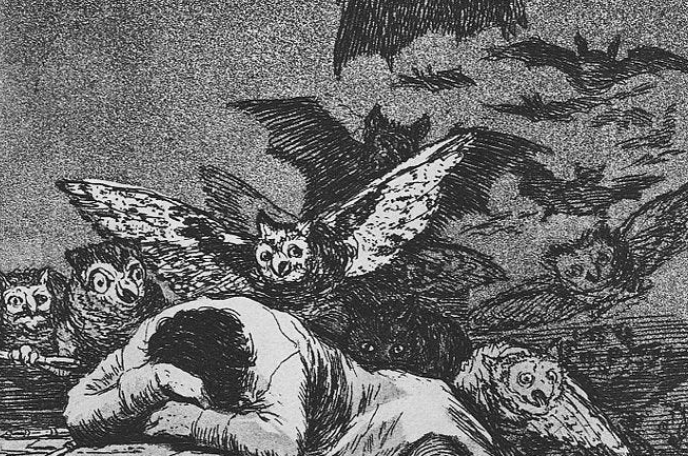
I finished the book in bed at midnight, and had to open up a Romance novel instead of going to sleep. Eventually I did succumb, and dreamed about Jessamine Chan's Hell World. The Romance novel failed to wash my brain.
I woke up with a sick stomach.
So, what I'm saying to you is: I FRIGGING LOVED IT.

(Random Side Note: As an aspiring novelist, I now read the Acknowledgments pages of books with religiosity. Chan thanked Percival freaking Everett for encouraging her to turn this short story idea into a novel. Just saying: I would die.)
Are You Some Kind of Masochist?
This is a question you're probably yourself asking right now—very reasonable. The answer is 'yes' when it comes to literature. I like to be smacked, whacked, burned, dragged, stabbed in the heart.

Humans have evolved to be deep-feeling and emotional creatures who live intertwined lives with one another. In this age of forced digital isolation and impotency to do anything about it, I relish the chance to feel with such intensity in a controlled fashion.
That is to say--this isn't going to happen to me tomorrow (though, shit, next year...? Not so sure). This happened to a fictional character who is not real, yet I felt the same raw, unadulterated aching that she felt.
Now that is magic.
Wow! Maybe We've Side-Stepped the AI Ranting Part!
Nope, tehe.
I read two books this year that left me feeling real, bone-quaking fear. The School for Good Mothers and The Dream Hotel.
Why?
It's not because I just hate GenAI for the myriad of reasons I've mentioned before. I mean, I do. But it's even worse than that!
Because these two novels show us what happens when humans turn decision-making over to artificial intelligence.
It shows us what happens when we allow the algorithm to dictate standards; presupposing that because it is algorithmically favored, it must be the only correct way to do something.
In both of these novels, the administrative and judicial state has permitted Silicon Valley technolords to roll out decision-making functions to AI, which will decide whether a person is detained for a period of time, or whether their children will be taken away.
Now, humans aren't reliably compassionate and fair, I grant you that.
But at least you have a CHANCE if a human judge is deciding you are a threat to your husband (The Dream Hotel) or if you're a good enough parent to be with your child (The School for Good Mothers). You have a constitutionally-mandated system of appeal.
You can't argue with the algorithm, not because it isn't possible (in theory, it is!) but because—for reasons that astound me—as a society we've granted some kind of omniscient status to this technology. It's happening already, when people vociferously argue with me about LEGAL MATTERS I am personally an expert in: "ChatGPT says it's X.'
Too many times to count, I have proven ChatGPT wrong with a simple Google search (finding a source document on, say, JSTOR, and a "-ai" in the search terms, of course) or opening up a flipping BOOK I own. AI is wrong all 👏🏻 the 👏🏻 time👏🏻. All the time. Yet in half the cases where I whipped out source text, the person I was arguing with still didn't believe me.
TechnoLords tell you the Slop Machine is infallible, and we take their word as gospel (why do so many of us believe anything a super rich person says...). If we keep this up, it's only a matter of time AI is granted access to make life-altering decisions about human lives, and making very, very bad ones.
OK, So We'll Just Fact-Check AI?
See, that won't solve the problem, due to the taste-making powers that this technology is permitted by its creators. Because the Slop Machine is pulling inaccurate information from the global dumpster called The Internet and repackaging a new "truth", a "new reality," based on sourcing a majority viewpoint on something.
For example: in the School for Good Mothers, we hear that Good Mothers do specific things, like talk to their kids all the time (that motherese/mommy babble pushed on already exhausted American women).

Many cultures (who far outperform us, shit) do not focus on this incessant chatter; mostly because their cultural presupposition is that the mother is in a community and the child is along for the ride throughout the day. The mother and child aren't holed up in a singular world, left alone to only entertain one another.
While there is evidence showing that kids who hear more (and varying) words in a day have better outcomes at a population level, this datum point tells such a small piece of the story. The fact is: there are many ways to be a good mother, and this algorithmic assumption that motherese is always best ignores entire cultural processes for childrearing.
That's because the algorithmic decision-making assumes whatever is done the most often in the dominant culture creating the algorithm is correct.
So, the Slop Machine selects for a 'truth' identified in the dominant (white, American) culture, because that is how the bulk of content written online is pointed. I'm not making this up: this research study from the University of Virginia is alarming on its own.
The UVA researchers concluded:
"[W]e found pervasive stereotype biases mirroring those in society in 8 value-aligned models across 4 social categories (race, gender, religion, health) in 21 stereotypes (such as race and criminality, race and weapons, gender and science, age and negativity), also demonstrating sizable effects on discriminatory decisions. Given the growing use of these models, biases in their behavior can have significant consequences for human societies."
And of course there is plenty of other quality research from top institutions in the field to back this up. Such as here and here, but it's not hard to find by giving it a Google (don't forget to add, "-ai"!)
OK, But So What?
Look, I get it. Maybe you're like, lady, goodness, calm down. Yeah, GenAI isn't perfect, but is that the biggest deal in the world?
Perhaps getting stuff wrong sometimes isn't. I'll grant that. I mean, I don't know. It's poisoned a bunch of people, but sure. How about I grant you that.
The larger implications though?
Big deal. Maybe the biggest deal. In the world.
Especially if governments—bodies holding power to restrict an individual's movement and take property by force with no higher authority to answer to—use AI to make decisions, those programs will necessarily be making decisions on premises, assumptions, and features that are at least partially inaccurate.
The School for Good Mothers and The Dream Hotel are cautionary tales about letting the runway train of Silicon Valley money-grubbing into the structures of our governing bodies. And for that, well...you shouldn't NOT be afraid.

Book Reviews!
Obviously these will be super hot and fast, since my ranting was long today (this seems to be the new trend, I'll admit—gonna try to cool it next time).
The Book of Records, by Madeline Thien
Rating: 5/5
Genre: Speculative Literary Fiction
Super Short Synopsis: A girl and her father are refugees on an island, living in a building made of time (?)(Yes!). They're separated from the mother and brother. But why? We also get various spandrels interweaving this narrative on three notable individuals of history—the 8th-century poet Du Fu, the 17th-century philosopher Baruch Spinoza, and the WW2-era writer, thinker, all around bad a$$ chick, Hannah Arendt.

Review: I was in the bathtub when I finished, sitting long after the water drained. This novel isn't just beautiful, it's a great feat of human endeavor. Perhaps one ought be a little bit of a nerd to really enjoy all the historical details. But even if you're a straight-up normie, those details are woven into the narrative in a unique and interesting way, I can't imagine any worthwhile complaints. Definitely read this.
The Employees, by Olga Ravn
Rating: 3/5
Genre: Speculative Literary Fiction
Super Short Synopsis: A bunch of employees are interviewed. They live on a weird spaceship and have a weird job to do. Some are human, some are android/artificial intelligence. They say some pretty wacky and also prescient things.

Review: Each chapter shares an 'interview' with an employee (we get their unfiltered close-first POV), with no additional context drafted between. But the stories tell the story, if you know what I mean. It's also quite short (a novella), so you'll read it quick. It was...interesting. For sure. My only reservation is that I don't know if everyone would have the patience for it.
Bright I Burn, by Molly Aitkin
Rating: 4/5
Genre: Historical Fiction/Feminist
Super Short Synopsis: We follow a beautiful young Irish woman in the 13th century as she does what is necessary to ensure she can live a life of independence. I know it's sounds crazy, but some of the people in her community aren't big fans!
Review: Our FMC isn't perfect, but boy is she tough. Needless to say, she's not going to let the rumors against her go down without a fight. If you love Slewfoot or other Good-for-Her witch stories (also because the scene-setting is gorgeous), this is one to pick up.
Midnight Timetable: A Novel in Ghost Stories, by Bora Chung
Rating: 4/5
Genre: Horror
Squick: 1/5
Super Short Synopsis: A woman goes to work at an institution researching haunted objects. Right off the bat, she sees some weird stuff. Her weird coworker starts to tell her about past workers and what happened to them. Shenanigans ensue.

Review: Kinda funny, sometimes creepy, sometimes straight up haunting and scary—all of the ghost stories will claw at you, but they're smart, multi-layered and really mean something too.
Small Things Like These, by Claire Keegan
Rating: 5/5
Genre: Historical Fiction/Literary
Super Short Synopsis: An Irish father of four daughters works the town delivery trade in the 1980s. He finds a freezing, bedraggled teenage girl crying out for her baby on the way to the town's convent. Shenanigans ensue.
Review: Claire Keegan maybe shouldn't be allowed to write like she does—with the whole "I'm so talented at writing emotional pain, the reader will feel like they too will drown in the character's suffering agony" thing. Keegan is a master writer, and her heart is in your hands, and boy is she going to squeeze the sh*t out of it. My chief complaint is that this book is too short at 128 pages. But don't let its size fool you. It'll knock you out with a Mike Tyson-level haymaker.
The Buddha in the Attic, by Julie Otsuka
Rating: 4/5
Genre: Historical Fiction/Literary
Super Short Synopsis: Told in the voice of one "we"—a group of Japanese brides shipped to the United States before WW2—we follow the women as they navigate the build-up to WW2 and the internments that comes as a result of Pearl Harbor.

Review: The "we" chorus feels so fresh and inventive as we learn about the women. I really can't find a single fault with it. And, also, as a novella, The Buddha in the Attic is short and very readable. As seems to be the trend for me lately, it's also kind of a huge bummer (but a beautifully-rendered one!)
The Metamorphosis, by Franz Kafka
Rating: 5/5
Genre: Literary Fiction
Super Short Synopsis: You know it, you love it. Gregor wakes up one day and he's a giant bug instead of a man. He is worries he'll be late to work. Shenanigans ensue.

Review: You know, sometimes books are classics because, like, they are just really freaking good. This is one of those books. I've read a few of Kafka's short stories (always loved), just never picked up The Metamorphosis. I'm trying to add some diversity of time period to my reading list going into 2026. It's paying off so far. If you haven't read The Metamorphasis, you really should. It's pretty much a perfect novel.
The Bell Jar, by Sylvia Plath
Rating: 4.5/5
Genre: Literary Fiction
Super Short Synopsis: Esther Greenwood is treated to an all-expenses month in New York, but it's not enough to stop the ennui. While in NYC, Esther has a few experiences, some bad, some very bad. When she goes home, things really hit the fan. Shenanigans ensue.
Review: The original messy girl novel is as good as it's supposed to be. For some reason, I held back on reading The Bell Jar for a long time, thinking it would sound old and stuffy like some classics can. Instead it has incredibly fresh, an evergreen, modern voice that captures you from the jump. I think most intelligent women living in this world have felt very much like Esther does from time-to-time (present company included).
Content Warning: I would rate The Bell Jar five stars but for some truly disgusting racial slurs and depictions of BIPOC characters. Though very infrequent, when you do come across the language, it is shockingly cruel. More so than in other fiction I've read from this era, which surprised me. Not sure what Plath's deal was here. It's hard to reconcile this nastiness with her gorgeous poetry. Ultimately, the racism diminishes the novel, its place in the modern literary canon notwithstanding.
I'm just going to say "goodbye" here/now because this is much too long. I look forward to sharing my favorite novels of 2025 after the first of the year!
As always, thank you for reading, have a GREAT week, stay cozy, and read banned books.
ILSYM,
Charlotte
P.S. If you're visiting on the web, don't forget to subscribe to the newsletter so you see it when it publishes! I am really just not "good" at social media, and only post about it maybe half the time...plus, it makes me look cool to have my subscriber count grow 🫶🏻.