How I protect my work from AI Witch Hunt allegations: “Pick Somebody Else"

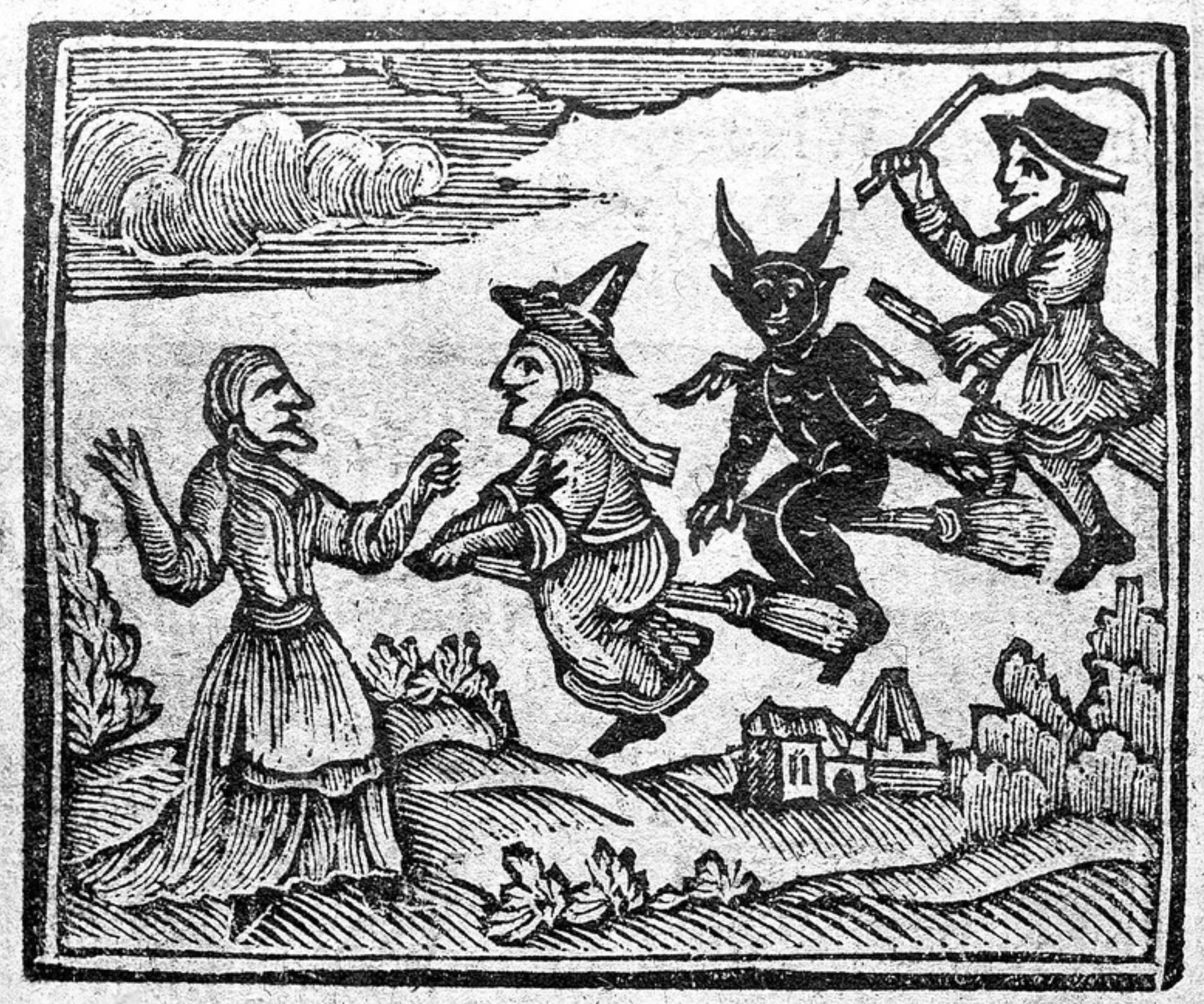
Book World is all a’tizzy about AI Witch Hunting. And for good reason—a number of authors have seen their reputations attacked (best case) and book deals die (worst case) in response to allegations that their work is infected with GenerativeAI.
I’m not exactly shy about my thoughts on GenAI in creative spaces (see, as a small set of examples, here, here, and here), but I’m just as skeptical about AI Witch Hunting for a number of reasons:
- GenAI was trained on human work. It’s trained to ape human words. You can’t know, not for certain—certainly not enough to impugne an author’s reputation with no real evidence, like this a*shat did—that a writer used it. Not yet anyway.
- Most of the ‘proof’ of GenAI use put forth is generated by some other version of GenAI. So: a robot is telling you that the writing is definitely produced by a robot? Puh-lease. Not to mention when you use said robot (like Pangram), it then tries to SELL YOU A PRODUCT to make inputted text sound less like a robot.

Okay so how do you prove that someone wrote their work with GenAI?
Or, on the flipside: how do you prove YOUR work was not written with GenAI?
I don’t think you can do either with absolute certainty.
But there is a LOT you can do to protect yourself.
PROTECTING MY WORK AND REPUTATION: Document Management, Knowing Your Helpers, Contracts FTW, and “Just Say No"
Here are the ways I’m building the record that I produced all creative work myself.
- I create new versions, with timestamps, every time I write, and save all notes and feedback in a similar manner.
Various platforms automatically save versions when you hit ‘save’ and also timestamp that version. I use Dropbox, because I like the Terms & Conditions. Dropbox is also super easy because you can work offline, and the platform saves everything for you in regular intervals. I don’t bother turning on Track Changes (no point for my day-to-day), but I could run a redline of those changes from each day, or a previous week, or whenever, if I had to.
Dropbox actually double-saves the work: I save a unique file through my Desktop shortcut, but Dropbox also automatically saves any earlier versions to the Cloud, and on their website, so you can pull those up too. Redundancy is always worthwhile in Document Management. For example, I’ve accidentally saved over old changes I wanted to go back to via the desktop app, and then pulled the previous text from the saved versions on the website.
Apparently Google Docs does timestamped versions too, but for reasons I’ve previously shared, I won’t use that platform. Scrivener is pretty solid terms-wise, but requires an expensive-ish license, and some people find it difficult to use. Definitely better than just saving a document over and over again on your desktop, in any case.
- I only share my work in beta stage with people I know and trust, who have expressly agreed not to use GenerativeAI in their review.
I've seen heartbreaking stories on Bookstagram about people finding beta readers through that app or Fiverr or some other place, only to find their manuscripts uploaded onto self-publishing platforms under someone else’s name. I literally cannot even imagine.
But I was born skeptical and often assume the worst about human behavior.
As a result, I’ve put in the time and effort to engage the writing community and find MY PEOPLE. I’m in a writing accountability group that’s met weekly for almost two years. We do writing retreats together, mirrored writing sessions, have an *AH-mah-zing* text chain, and have become very close friends. This group has created some of the richest experiences of my adult life.
(Hi you three, I love you!)
As a result, I’ve got three built-in beta readers; they’ve given me extensive feedback on two versions of WHAT THE BODY WANTS, and also many short stories, poems, and even residency and workshop applications. We met in one of those forgettable two-hour “How to Sell Your Book” sessions on Zoom. And then we all kept showing up until we were comfortable enough to share our work with each other.
You can meet your people too. Even if not online, at your city’s literary society, the library, book clubs, author meet-and-greets, etc. Make the effort to forge a connection with people you trust. Not to mention I also have three women to vouch for MY PROCESS, because I’ve literally been sharing the nitty gritty with them for quite some time.
- I will only hire people to assist my projects that contractually agree not to use AI.
Recently, I looked into one of those companies that offers to do your social media for a fee. I just don’t have time for it, and I’m not good at it, so I was curious about cost and inquired about the details of such an arrangement.
I asked: “Do you use GenAI in your process?"
They responded: “We do use AI as a tool to help streamline certain tasks, but it never replaces the strategy, creativity, or relationship."
Me: “Okay, thanks but no thanks, I only work with vendors who don’t use GenAI."
End scene.
Last April, I hired a graphic designer I’d solicited on Threads. I wrote up a contract and it said “you can’t use GenAI.” Then, when she sent me the proofs, one of the pieces was very obviously AI. When confronted, she admitted that she used it for one file because she was running out of time.
I paid her, but canceled our arrangement. I never used those images and I never will.
If I decide to move forward with hiring people for the above-stated purposes again, I’ll start with local people I can meet face-to-face. But in any case, I’ve created a record showing that this is a red line for me.
- I do not use any programs that incorporate GenAI; OR, I turn them off if the program is necessary to my projects.
Here’s all the tech I use, selected after lots of trial and error over the years.
These services meet some of my firm rules, like: (i) no GenAI, or the feature can be disabled; (ii) the Terms & Conditions for licensing copyright are acceptable; and (iii) there's minimal-to-no data tracking—
- Document Processing: Microsoft Word (CoPilot is off)
- Search Engine: Kagi (no AI summaries, heightened privacy)
- Storage: Dropbox
- Image Generation: Canva (none of the AI features, including background eraser) and real life journaling supplies
- Email: Fastmail.com + Proton.me
- Newsletter: Ghost.org (anyone on Substack should be running away after they installed Pangram on everything)
- Process journaling with paper and ink.
Visual artists commonly utilize process journaling—a round-up of the work they completed that day, how it felt, where they left off, what inspired them. I have a commonplace notebook and daily journal where I capture the basics of life, but I’ve not done a detailed process journal.
For my next novel, I’ll definitely be doing this just for the project itself; in addition, I’ll be scanning in the pages as I go and saving each to Dropbox for a timestamp.
Still, I have a number of handwritten entries that show snippets of my process developing various of my creative works over the past years, including WHAT THE BODY WANTS. This is just another tool in the toolbox for building your case.
Here’s why I think this will work.
Most contract and tort claims filed in civil court are judged based on the preponderance of the evidence —meaning that, based on the application of law to facts presented, the arbiter (be it a judge or jury) believes there is ‘more than likely’ chance (say, 51%) that the evidence presented supports the claims. For defamation in most states, the burden is a little higher, needing to show “clear and convincing evidence,” a burden between the criminal standard of “beyond a reasonable doubt” and “preponderance of the evidence."
Faced with the stress of this whole thing, many commenters online say things like: “Well don’t bother trying to build a case for yourself, there is no way to prove you didn’t use AI with 100% certainty.” One woman got really mad at me when I mentioned document management through versioning and said: “But you could have run it through Claude on a different computer, then typed in the changes, or gotten notes on structure and then implemented those, etc. etc.”
My response: well I don’t have to prove it with 100% certainty in court. Need only I prove a person or institution (1) breached my contract terms; or (2) defamed me with something between like 51%ish and/or, I dunno, 75-80%ish likelihood.
I’m building a record of my hard-won creative work like I'd build a case for a legal matter: by showing that the overall weight of the evidence suggests GenAI was not used to develop my works. That record is generated from the items listed above.
Sure, someone could say “yeah well that doesn’t prove you didn’t use a different computer, or pay someone to type it in, or yada-yada-yada."
But practically speaking, this is just highly unlikely: people who resort to using GenAI to make art are doing so because they’re too lazy or incapable of going through the slow, arduous process of art-making. They’re looking for something fast and easy to make a buck.
Imagine someone deciding to write a BOOK with GenAI, but in secret. So they make methodical updates in small bursts, saving a new version every single day, maybe even hand-typing the GenAI-generated changes, writing a fake process journal for, like, TWO YEARS.
Nobody with any shred of sanity would do this. And that’s what a judge or jury will see.
I believe the weight of the evidence I’m building would support my claims. I really hope an author sues some of these Witch Hunters for dropping their text into Pangram (this is a copyright violation if you’re not given permission, btw!!!!). With the right evidence, you could absolutely prove defamation or slander, especially if the only evidence is a robot tattling on another robot.
Yeah but in the court of public opinion, will they believe you?
And that’s where “Just Say No” comes in—if you are someone who refuses to engage with the technology, you’re going to have a lot of people coming out of the woodwork to defend you. The simplest and easiest way to avoid GenAI allegations is to not use GenAI in your personal life. Some people are required to use it professionally, but you can eschew it during your day-to-day life otherwise.
One more thing– I often hear creatives wailing: "We shouldn’t have to do this! It’s not fair!"
Well I shouldn’t have to worry about someone assaulting my kids at a slumber party. I shouldn’t be worried about walking into a parking garage elevator with a lone man at night. I shouldn’t be worried about my eggs being full of salmonella.
And yet.
And yet.
I will tell you this: it’s not going to my kid, or me, or my eggs (the metaphor is collapsing, but you get it). Stated more plainly, I’m not going to be an easy target—pick another guy.

That’s what a clear record of evidence will do for you.
(And, as always, remember: I’m a lawyer, but I’m not your lawyer. This newsletter does not contain legal advice, and it should never be taken as such. These are things that I do to protect my own work using my own knowledge and background, but you should seek out competent counsel if you have any questions about your own.)
Next Time!
I’ll publish my favorite books from August 2026, and also tell you about some amazing new work published by my awesome Writing Friends.
Check out my updated website, which features more details about the novel I’m querying for representation, WHAT THE BODY WANTS. The art I utilized for the temporary cover is, uh, illustrative of the vibe lol.
Soon I’ll also have details on a free, donations-based workshop I’m offering, aimed at helping creatives protect their IP and copyright in these dark times of BigTech and GenAI. Dates will be announced in the next edition of HAVING WRITTEN.
As always, please send this to your friends, don’t use GenerativeAI, and read banned books!
LYLAS/B,